
Seeing water stains on your ceiling or noticing damp patches can be stressful, especially when it hasn’t rained in days or even weeks. In Johannesburg, many homeowners immediately assume their roof is leaking, but in reality, the cause is often something else entirely.
Understanding why a ceiling can leak without rainfall is critical. When the problem is misdiagnosed, it frequently leads to unnecessary repairs, wasted money, and ongoing damage that never truly gets resolved.
This guide explains the most common reasons ceilings leak without rain and how Johannesburg homeowners should approach the problem correctly.
Can a Ceiling Leak Without Rain?
Yes, and it happens far more often than most people realise.
A ceiling leak does not automatically mean water is currently entering your home from outside. In many cases, moisture has already been present inside the roof structure for some time and only becomes visible much later.
Common non-rain-related causes include:
-
Condensation buildup inside the roof space
-
Plumbing or air-conditioning pipes running through ceilings
-
Failed waterproofing systems that have deteriorated internally
-
Trapped moisture from previous rainfall slowly moving through materials
Water does not always show up immediately. It can sit inside insulation, timber, concrete slabs, or ceiling boards for weeks before gravity and saturation cause visible stains or dripping.
Common Causes Homeowners in Johannesburg Overlook
1. Condensation Buildup in Roof Spaces
Condensation is one of the most misunderstood causes of ceiling leaks in Johannesburg homes.
Warm, moist air from inside the house rises into the roof space. When it meets cooler surfaces, especially during winter nights or sudden temperature changes, condensation forms. Over time, this moisture can drip onto ceiling boards, leaving stains that look exactly like a roof leak.
This is especially common in:
-
Poorly ventilated roof spaces
-
Homes with bathrooms or kitchens directly below ceilings
-
Older Johannesburg homes without modern insulation
-
Winter months and early mornings
Because rain is not involved, homeowners often struggle to understand where the water is coming from.
2. Old Waterproofing That Has Failed Internally
Waterproofing systems do not fail overnight.
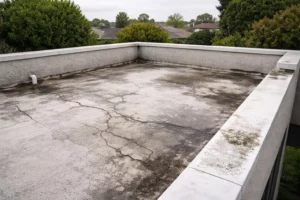
In Johannesburg, flat concrete roofs, balconies, parapet walls, and internal gutters are common problem areas. Over time, waterproofing membranes can deteriorate and allow water to enter during previous rainfall.
That trapped moisture can then:
-
Migrate through concrete slabs
-
Travel along steel reinforcement or timber
-
Appear weeks later as ceiling damp or dripping
Even when the weather is dry, this internal moisture movement can make it seem like the ceiling is leaking for no reason.
3. Plumbing or Air-Conditioning Pipes
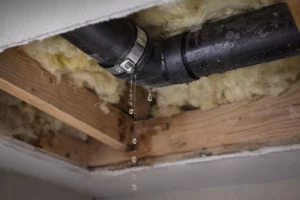
Many Johannesburg homes have plumbing pipes, drainage lines, or air-conditioning systems running through ceiling voids.
Small issues such as:
-
Hairline cracks in pipes
-
Loose pipe fittings
-
Blocked air-conditioning drain lines
can cause slow, continuous leaks that have nothing to do with rain. Because these leaks are hidden, water often spreads before it becomes visible inside the home.
4. Moisture Traveling From Another Section of the Roof
Water does not always travel straight down.
A leak in one section of the roof can move along:
-
Roof beams or trusses
-
Ceiling boards
-
Concrete slabs
before finally appearing in a completely different room. This is why simply repairing the visible ceiling damage rarely solves the problem. The actual point of entry could be several metres away.
Why Guessing the Cause Can Be Costly
One of the biggest mistakes Johannesburg homeowners make is fixing the symptom instead of the source.
Common costly mistakes include:
-
Repainting ceilings without fixing the cause
-
Replacing ceiling boards while moisture is st
-
ill present
-
Waterproofing the wrong section of the roof
Without correctly identifying where the water is coming from, the problem almost always returns, often worse than before.
What You Should Do Next
If your ceiling is leaking and there has been no rain in Johannesburg recently, it strongly suggests that the issue is internal, hidden, or delayed from previous exposure.
The smartest next step is a professional inspection.
A proper roof and moisture assessment can:
-
Trace the path of water inside the structure
-
Identify the true source of the leak
-
Prevent further damage before it spreads
-
Save you from unnecessary repair costs
If the cause is not obvious, it is best not to guess. A professional evaluation ensures the repair is done correctly the first time and provides long-term peace of mind.
